

Perimenopause often begins quietly – with changes so subtle that many women ignore them at first.
At 45, Kavitha was doing it all.
She managed office deadlines, family needs, aging parents, and teenage children. On the outside, she looked calm and capable.
But inside, something felt different.
Her periods were irregular.
Her moods changed quickly.
Some days she felt anxious for no reason.
Some nights, sleep refused to come.
Everyone around her said, “It’s just stress.”
But Kavitha felt it was more than that.
One evening, she finally decided to meet Dr. Ananya, hoping for some real answers.
Kavitha sat down and said softly,
“Doctor, I don’t feel like myself anymore. Am I just stressed… or is something else happening? I don’t know!”
Dr. Ananya smiled gently.
“Kavitha, many women ask this question after 40. What you may be experiencing is perimenopause.”
 What Is Perimenopause?
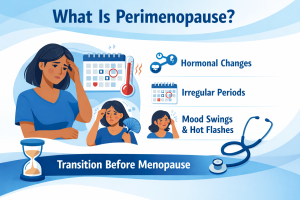
Perimenopause is the transition phase before menopause. It usually starts in the early to mid-40s and can last a few years. During this time:
- Hormone levels go up and down
- Periods become irregular
- Mood and sleep get affected
“It’s not an illness,” Dr. Ananya explained.
“It’s a natural phase, but it needs understanding.”
Kavitha sighed with relief.
“So I’m not imagining things?”
“Not at all,” Dr. Ananya replied. “Your body is adjusting.”
Why Perimenopause Is Often Confused With Stress
In Indian women, perimenopause often goes unnoticed because:
- Women are used to adjusting
- Health comes last
- Symptoms are blamed on work or family pressure
“But stress and perimenopause often happen together,” Dr. Ananya said.
“That’s why the signs feel confusing.”
Q&A
Q1: At what age does perimenopause start?
Usually between 40 and 50 years.
Q2: Is perimenopause the same as menopause?
No. Perimenopause comes before menopause.
Q3: Can working women feel symptoms more strongly?
Yes. Stress can make symptoms worse.
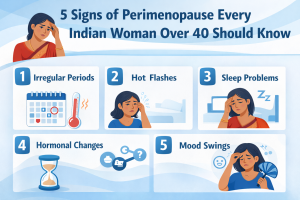
5 Signs of Perimenopause Every Indian Woman Over 40 Should Know
Kavitha leaned forward.
“Doctor, what signs should I look for?”
Dr. Ananya explained the most common perimenopause symptoms, especially seen in Indian women.
- Irregular Periods
- Periods come early or late
- Flow may be heavy or very light
- Some months may be skipped
“This is often the first sign,” Dr. Ananya said.
- Mood Swings & Irritability
Kavitha nodded quickly.
“I feel angry, sad, or emotional without reason.”
Dr. Ananya replied,
“Changing hormones affect emotions. You’re not overreacting.”
- Sleep Problems
- Trouble falling asleep
- Waking up at night
- Feeling tired even after sleep
Poor sleep increases stress and mood issues.
- Hot Flashes & Body Heat
- Sudden feeling of heat
- Sweating, especially at night
- Feeling uncomfortable suddenly
“These are common but not talked about,” said Dr. Ananya.
- Low Energy & Anxiety
- Feeling tired all the time
- Worrying more than usual
- Loss of confidence
Kavitha said quietly,
“I thought I was becoming weak.”
Dr. Ananya shook her head.
“No. Your body is changing, not failing.”
- Social Pressure & Silent Fear
Kavitha shared something personal.
“People say I shouldn’t worry about periods now. But I still feel scared… and sometimes embarrassed.”
Dr. Ananya replied gently,
“Women are taught to stay silent. But awareness is strength.”
Q&A
Q1: Are mood swings normal during perimenopause?
Yes. Hormonal changes affect emotions.
Q2: Does perimenopause mean pregnancy is impossible?
No. Pregnancy is still possible until menopause.
Q3: Should irregular periods after 40 be checked?
Yes. Always consult a doctor.
How to Deal With Perimenopause- Simple, Practical Solutions
Kavitha looked hopeful.
“Doctor, what can I do to feel better?”
Dr. Ananya smiled.
“Perimenopause can be managed. Let’s make it easier.”
- Lifestyle Changes (No Big Cost)
- Walk 30 minutes daily
- Gentle yoga or stretching
- Fixed sleep time
- Reduce caffeine and sugar
“These small steps balance hormones naturally,” Dr. Ananya said.
- Eating for Balance
- More vegetables and fruits
- Less fried and packaged food
- Enough water
- Smaller, regular meals
“Food affects hormones more than we realize.”
- Stress Management
- Deep breathing
- Quiet personal time
- Sharing feelings with family
- Saying “no” sometimes
Kavitha smiled,
“I never thought rest was also a treatment.”
“It is,” Dr. Ananya replied.
- Medical Support When Needed
- Hormone checks
- Medicines if symptoms are severe
- Regular follow-ups
“Support is available. You don’t have to suffer,” Dr. Ananya said.
- Emotional Care
- Stop self-blame
- Understand this phase
- Talk openly
“Perimenopause is a phase & not the end of youth or value,” Dr. Ananya added.
Q&A
Q1: Can perimenopause be treated?
Symptoms can be managed very well.
Q2: How long does perimenopause last?
A few years, different for each woman.
Q3: When should I see a doctor urgently?
If bleeding is very heavy or symptoms affect daily life.
Conclusion
So, is it just stress or perimenopause?
For many Indian women over 40, it’s both.
But with perimenopause awareness, the right care, and simple lifestyle changes, this phase becomes easier.
A few months later, Kavitha returned smiling.
“My moods are better. I sleep better. And I don’t feel scared anymore.”
Have you ever felt changes in your body or mood after 40 and wondered if it was stress or something more?

0 Comments