
Period hygiene became an important conversation the day Kavitha walked into Dr. Ananya’s clinic with a familiar calm on her face.
Kavitha walked into Dr. Ananya’s clinic with a familiar calm on her face.
At 45, she had already learned how important it was to listen to her body, thanks to her recent health journey.
But this visit was different.
By her side stood her 13-year-old daughter, Anu, quiet, awkward, and holding her mother’s hand a little too tightly.
“Doctor,” Kavitha said gently,
“She just got her periods. I want her to grow up without fear, shame, or confusion… unlike how many of us did.”
Dr. Ananya smiled warmly.
“That’s the best gift a mother can give knowledge and confidence.”
And that’s where this story begins.
Anu looked nervous.
“Doctor… is it normal to feel scared?”
Dr. Ananya nodded kindly.
“Very normal. But periods are not something to fear. They are a sign that your body is healthy.”
 What Is Period Hygiene?
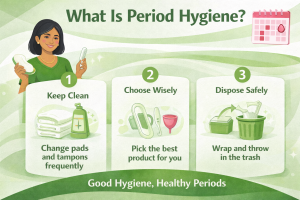 What Is Period Hygiene?
Dr. Ananya explained in simple words:
Period hygiene means:
- Keeping your private area clean
- Using the right menstrual product
- Changing it on time
- Taking care of your skin and comfort
Good period hygiene:
- Prevents infections
- Reduces itching and rashes
- Builds confidence
“In India,” she added,
“many girls don’t learn this early because of silence and taboos.”
Simple Period Hygiene Tips for Teens
Dr. Ananya shared easy period hygiene tips for teens:
- Change pads every 4-6 hours
- Wash hands before and after changing
- Clean the area with water (no harsh soap)
- Wear clean, breathable underwear
- Dispose products properly
Anu relaxed a little.
“So it’s not that complicated?”
“Not at all,” Dr. Ananya smiled.
Breaking the Taboo
Kavitha added softly,
“In our time, we were told not to talk about periods.”
Dr. Ananya replied,
“That silence caused more harm than periods ever did. Talking is healthy.”
Q&A
Q1: Is it okay to bathe during periods?
Yes. Daily bathing keeps you clean and fresh.
Q2: How often should pads be changed?
Every 4-6 hours, even if the flow is light.
Q3: Are periods dirty?
No. Period blood is natural and healthy.
Beyond the Basics: Choosing the Right Product for Your Lifestyle
Anu hesitated before asking,
“Doctor… There are so many products. Which one should I use?”
Dr. Ananya smiled.
“That’s a great question. Let’s keep it simple.”
Best Sanitary Products for Beginners
For teens, especially beginners, Dr. Ananya explained:
Sanitary Pads
- Easiest to use
- Widely available
- Good for school and travel
“Pads are usually the best choice when you’re just starting,” she said.
Tampons
- Used inside the body
- Better for sports or swimming
- Needs practice and comfort
“Only try them when you feel ready,” Dr. Ananya advised.
Menstrual Cups
- Reusable and eco-friendly
- Cost-saving in the long run
- Needs guidance and hygiene care
“These are good options later, not on day one,” she added.
How to Choose the Right Product
Dr. Ananya gave simple advice:
- Start with what feels safe
- Comfort matters more than trends
- There is no “one best product”
- Your choice can change with age
Anu smiled shyly.
“So I don’t have to copy my friends?”
“No,” Dr. Ananya laughed.
“Your body, your rules.”
Skin Care and Cramp Management During Your Cycle
Dr. Ananya also shared tips for comfort:
- Use cotton pads to avoid rashes
- Wear loose clothes
- Use a warm water bag for cramps
- Drink enough water
- Rest when needed
“Periods are not a test of strength,” she said.
“They’re a time for care.”
Q&A
Q1: Are expensive pads better?
Not always. Comfort and safety matter more.
Q2: Can teens use menstrual cups?
Yes, but only with proper guidance and comfort.
Q3: What helps period cramps naturally?
Warm compress, light stretching, and rest.
Sustainable Periods: Why Hygiene Matters More Than You Think
Kavitha listened carefully as Dr. Ananya spoke about something deeper.
“Period hygiene is not just personal,” she said.
“It affects health, confidence, and even society.”
Menstrual Health in India- Why Awareness Matters
Dr. Ananya explained:
In India:
- Many girls miss school during periods
- Infections are common due to poor hygiene
- Shame stops girls from asking questions
“Good menstrual health education changes lives,” she said.
Why Sustainable Period Habits Matter
Sustainable hygiene means:
- Fewer infections
- Better comfort
- Less waste
- Long-term savings
“Choosing the right product and using it correctly is an investment in health,” Dr. Ananya explained.
Emotional Confidence Is Part of Hygiene Too
Anu asked softly,
“Doctor… Can I go to school during periods?”
Dr. Ananya smiled.
“Yes. Periods should never stop your life.”
She added:
- Periods don’t make you weak
- They don’t reduce your worth
- Confidence grows with knowledge
Kavitha felt emotional listening to this, wishing she had heard the same words as a teen.
How Parents Can Support Teens
Dr. Ananya advised Kavitha:
- Talk openly
- Answer questions honestly
- Avoid fear-based rules
- Normalize periods at home
“When mothers speak freely,” she said,
“daughters grow fearless.”
Q&A
Q1: Can poor period hygiene cause infections?
Yes. It can lead to itching, rashes, and infections.
Q2: Are periods linked to future fertility?
Good menstrual health supports long-term reproductive health.
Q3: How can teens build confidence during periods?
With correct information, comfort, and support.
Conclusion
Good period hygiene is more than a routine.
It’s confidence.
It’s healthy.
It’s freedom.
As they stood up to leave, Anu looked more relaxed than when she arrived.
“Thank you, Doctor,” she said quietly.
“I’m not scared anymore.”
Kavitha smiled, holding her daughter close.
Dr. Ananya nodded warmly.
“That’s Period power, when knowledge replaces fear.”
Did you grow up feeling shy or confused about periods like Kavitha once did?
0 Comments