

Teen body changes can feel confusing, emotional, and overwhelming – which is why Kavitha returned to Dr. Ananya once again, this time with her teenage daughter, Anu, walking a little more confidently than before.
Kavitha returned to Dr. Ananya once again- this time with her teenage daughter, Anu, walking a little more confidently than before.
“Doctor,” Kavitha said with a gentle smile,
“She’s doing better with her periods now. But lately, she keeps asking me one question, Am I normal?”
Anu nodded, eyes down.
“My body feels different. My emotions feel bigger. Sometimes I don’t recognize myself.”
Dr. Ananya smiled kindly.
“That question –Am I normal?– is the most normal question of late teens.”
And with that, she began to explain what so many teens feel but don’t always understand.
Anu sighed,
“Doctor, one day my clothes fit, the next day they don’t. And my skin… it’s not like before.”
Dr. Ananya nodded.
“Late teens are a time of rapid body changes. Growth doesn’t stop at childhood, it continues quietly into your early 20s.”
 What Happens to the Body in Late Teens?
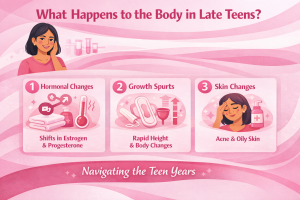 What Happens to the Body in Late Teens?
Dr. Ananya explained in simple words:
- Height may still increase slightly
- Body shape changes
- Hips, waist, and chest develop
- Weight may shift even without overeating
“These are called growth spurts,” she said.
“They don’t follow a fixed schedule.”
Why do Skin Changes?
Anu touched her cheek.
“I suddenly have pimples. Is something wrong?”
Dr. Ananya smiled gently.
“Nothing is wrong. Hormones are very active right now.”
Common skin changes include:
- Acne or pimples
- Oily or dry skin
- Sudden breakouts before periods
“These changes are temporary,” she assured.
“Good hygiene and patience help.”
Emotional Impact of Physical Changes
Kavitha added softly,
“When I was her age, no one explained this. We just felt insecure.”
Dr. Ananya nodded.
“Understanding reduces fear. Bodies change, but they don’t become ‘wrong.’”
Q&A
Q1: Is it normal to gain weight in late teens?
Yes. Body shape changes naturally during this phase.
Q2: Do pimples mean poor hygiene?
No. Pimples are mainly caused by hormones.
Q3: Will these changes stay forever?
Most changes settle as hormones balance with age.
Why Emotions Feel So Intense
Anu looked hesitant before speaking.
“Doctor… sometimes I feel very happy, then suddenly sad or angry. I don’t know why.”
Dr. Ananya replied warmly,
“That’s because your brain is still growing.”
What’s Happening Inside the Teen Brain?
Dr. Ananya explained:
- The emotional part of the brain develops faster
- The decision-making part develops later
- This makes feelings stronger and reactions quicker
“It’s like having a powerful engine with learning brakes,” she said with a smile.
Why Emotions Feel Overwhelming
Common emotional changes in late teens:
- Mood swings
- Feeling misunderstood
- Self-doubt
- Strong reactions to small things
“These emotions are real,” Dr. Ananya said.
“They are not drama or weakness.”
Stress, Society, and Silent Pressure
Anu looked down.
“Sometimes people say I’m overreacting.”
Dr. Ananya replied firmly,
“Your feelings are valid. What you need is support, not silence.”
She added that social pressure, comparisons, and fear of judgment make emotions heavier, especially for girls in India.
Q&A
Q1: Are mood swings normal in late teens?
Yes. Hormones and brain development cause emotional changes.
Q2: Does stress affect emotions more at this age?
Yes. Stress feels stronger during this phase.
Q3: Should teens talk about their feelings?
Yes. Sharing reduces emotional burden.
Loving the Version of You That’s Emerging
Kavitha asked softly,
“Doctor, how can I help her feel confident?”
Dr. Ananya smiled.
“Confidence grows when teens stop fighting change and start understanding it.”
Learning to Accept Change
Dr. Ananya told Anu:
- You don’t have to look like anyone else
- Your body is not late or early—it’s unique
- Change does not mean loss
“Growth feels uncomfortable because it’s new,” she said.
Simple Ways Teens Can Care for Themselves
Dr. Ananya shared easy tips:
- Eat regular meals
- Get enough sleep
- Move your body daily
- Limit screen time
- Speak kindly to yourself
“These habits support both body and mind,” she explained.
The Role of Parents and Family
Dr. Ananya advised Kavitha:
- Listen without judging
- Avoid comparisons
- Normalize body talk
- Encourage open questions
“When parents listen, teens feel safe,” she said.
Confidence Is Not Perfection
Anu smiled shyly.
“So I don’t have to have everything figured out?”
Dr. Ananya laughed softly.
“No one does at this age, or any age.”
Q&A
Q1: Is it normal to feel confused about myself?
Yes. Late teens are a time of self-discovery.
Q2: Will confidence improve with age?
Yes. Understanding and self-acceptance help greatly.
Q3: When should teens seek help?
If emotions feel overwhelming or affect daily life.
Conclusion
So, if you’re asking:
“Am I normal?”
The answer is simple:
- Yes, you are
- Change is natural
- Growth takes time
- And becoming you is a journey
As they stood up to leave, Anu looked calmer than when she arrived.
“Doctor,” she said quietly,
“I think I understand now. I’m not broken, I’m growing.”
Dr. Ananya smiled warmly.
“That’s exactly it.”
Kavitha held her daughter’s hand, feeling grateful that this generation could grow up with answers instead of silence.
Have you ever asked yourself, “Am I normal?” during your teenage years?

0 Comments