
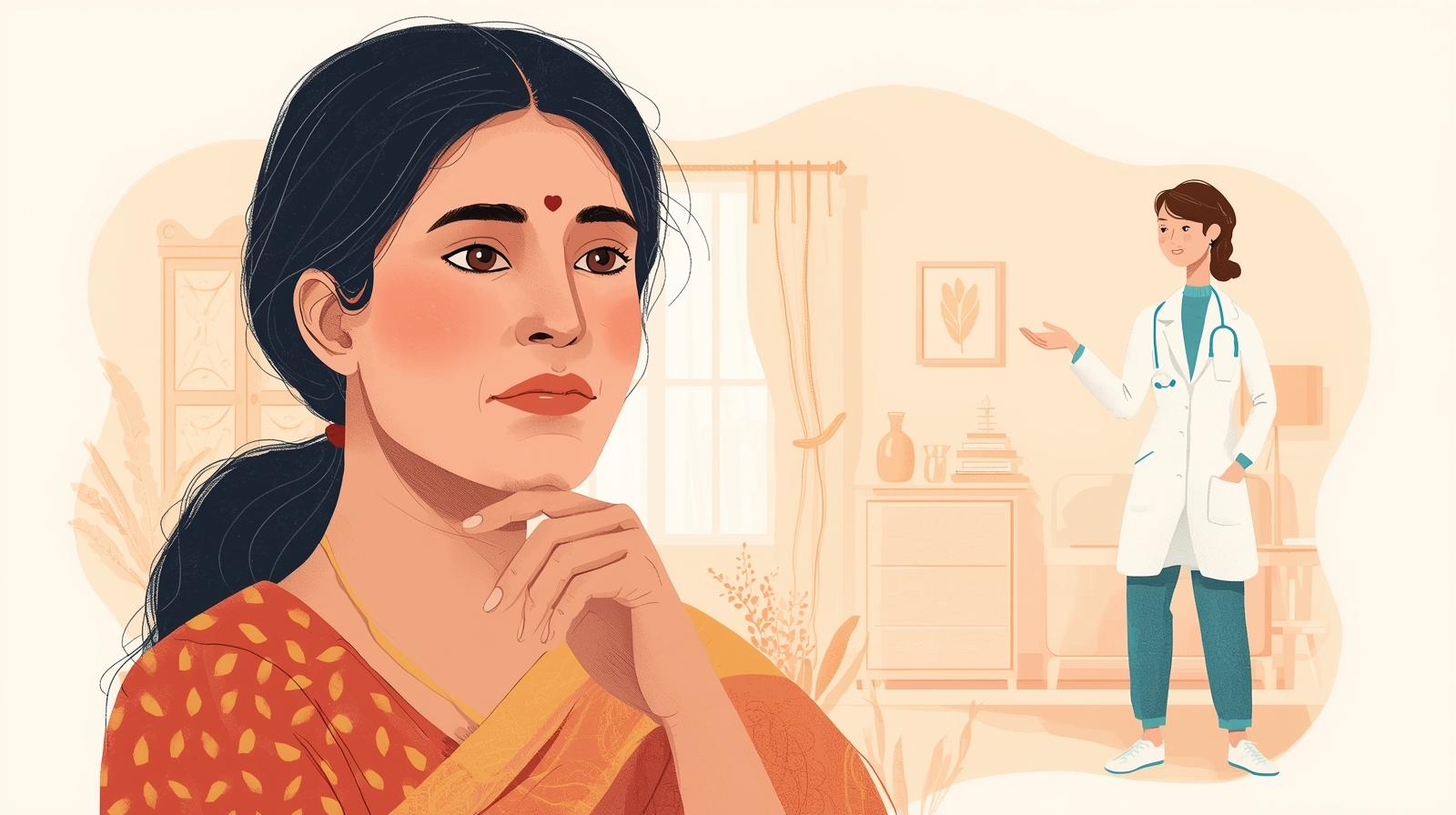
PCOD After Marriage Why Does It Feel So Hard?
Marriage had just begun for Meera, a 26-year-old newlywed.
New home. New relationships. New dreams.
But along with bangles and blessings, Meera carried a quiet worry PCOD and irregular periods.
She smiled in front of her in-laws, laughed with her husband, and followed every custom.
But inside, she felt scared.
“What if they ask about babies?”
“What if my body fails me?”
“What if they think something is wrong with me?”
One day, gathering all her courage, Meera walked into Dr. Ananya’s clinic hoping for answers and reassurance.
Meera sat quietly, twisting the edge of her dupatta.
“Doctor,” she said softly, “I was diagnosed with PCOD before marriage. Now my periods are still irregular. I feel embarrassed at my in-laws’ house… and scared with my husband.”
Dr. Ananya smiled kindly.
“Meera, you are not alone. Many women face PCOD problems after marriage, especially due to stress, lifestyle change, and emotional pressure.”
What Is PCOD?
Dr. Ananya explained in simple words:
- PCOD means the ovaries make many immature eggs
- These eggs form small cysts
- This causes irregular periods
- Hormones get slightly disturbed
“It’s common and manageable,” she added. “But marriage brings pressure, and pressure worsens PCOD.”
Meera nodded slowly.
“So marriage didn’t cause PCOD… but it made it louder?”
Dr. Ananya smiled.
“Exactly.”
Signs of PCOD After Marriage
Dr. Ananya listed common signs Meera should watch for:
- Periods coming late or skipping months
- Sudden weight gain
- Pimples or oily skin
- Hair fall
- Mood swings
- Feeling tired all the time
- Fear related to pregnancy
Meera whispered,
“I have almost all of these.”
Frequently Asked Questions
Q1: Is PCOD common after marriage?
Yes. Stress, routine change, and pressure can worsen PCOD symptoms.
Q2: Does PCOD mean infertility?
No. PCOD may delay pregnancy, but most women conceive with treatment.
Q3: Is it something to feel ashamed about?
Never. PCOD is a health condition, not a failure.
How to Identify PCOD Problems Early
A week later, Meera returned with reports.
Blood tests. Scan reports. Hormone levels.
Dr. Ananya explained calmly.
“PCOD doesn’t shout. It whispers. You just need to listen.”
How to Identify PCOD After Marriage
- Irregular periods (main sign)
- Ultrasound scan showing multiple cysts
- Hormone tests showing imbalance
- Weight changes without reason
Meera looked worried.
“My mother-in-law keeps hinting about babies. What if pregnancy doesn’t happen soon?”
Dr. Ananya leaned forward gently.
“Meera, society talks loudly. Science talks clearly. PCOD slows ovulation, but it does not stop motherhood.”
Meera’s eyes filled with tears.
“No one explained it like this before.”
Emotional Burden After Marriage
Dr. Ananya addressed what most people ignore:
- Fear of being judged
- Guilt without reason
- Pressure from relatives
- Silence between husband and wife
- Feeling “less” as a woman
“PCOD after marriage affects the mind as much as the body,” Dr. Ananya said.
“And silence makes it worse.”
Meera finally said aloud,
“I haven’t even told my husband properly.”
Dr. Ananya replied gently,
“Talking is the first treatment.”
Frequently Asked Questions
Q1: How soon should I see a doctor after marriage if periods are irregular?
If periods are irregular for 2–3 months, consult a gynecologist.
Q2: Can stress delay periods in PCOD?
Yes. Stress directly affects hormones.
Q3: Should I tell my husband about PCOD?
Yes. Support makes treatment easier and faster.
PCOD Solutions After Marriage
Healing the Body, Calming the Heart
Meera took a deep breath.
“Doctor… tell me what to do. I want to be healthy. I want peace.”
Dr. Ananya smiled reassuringly.
“PCOD can be managed beautifully. Let’s take it step by step.”
-
Solution 1: Gentle Lifestyle Changes
No strict rules. No punishment.
- 30 minutes walking daily
- Home-cooked food
- Less fried and sugary food
- Fixed meal timings
- Good sleep
Meera smiled weakly,
“So no starving?”
Dr. Ananya laughed softly.
“Never. Healing is not punishment.”
-
Solution 2: Regularizing Periods
Medicines may be given to:
- Balance hormones
- Bring periods regularly
- Reduce cyst formation
“These are temporary helpers,” Dr. Ananya explained.
-
Solution 3: Emotional Support & Communication
- Talk openly with husband
- Share fears
- Ask for support
- Stop self-blame
“PCOD needs teamwork,” said Dr. Ananya.
-
Solution 4: Pregnancy Planning
When Meera asked softly,
“Can I get pregnant?”
Dr. Ananya answered confidently:
“Yes. Many women with PCOD become mothers naturally or with simple help.”
Options include:
- Ovulation medicines
- Lifestyle correction
- IUI if needed
- IVF only if required later
Meera smiled through tears.
“So my dream is still possible?”
“Absolutely,” Dr. Ananya replied.
Frequently Asked Questions
Q1: Can PCOD be cured completely?
PCOD can be controlled very well with lifestyle and treatment.
Q2: How long does it take to improve periods?
Usually 3–6 months with proper care.
Q3: Can a newly married woman delay pregnancy due to PCOD?
Yes, but with guidance, pregnancy can be planned safely.
Conclusion
A few months later, Meera walked into the clinic smiling.
“My periods are regular now,” she said softly.
“And I finally told my husband. He supports me.”
Dr. Ananya smiled with pride.
“PCOD didn’t change who you are.
It only taught you to listen to your body.”
Meera left the clinic lighter not just in body, but in heart.
PCOD problems after marriage are common but silence makes them heavier.
With awareness, early care, and emotional support, life becomes normal again.
If you are newly married and struggling with PCOD, remember:
- You are not weak
- You are not alone
- You are not broken
- And motherhood is still possible
Your journey matters.
And help is always available.
Book Your Women’s Health Consultation Today
0 Comments