
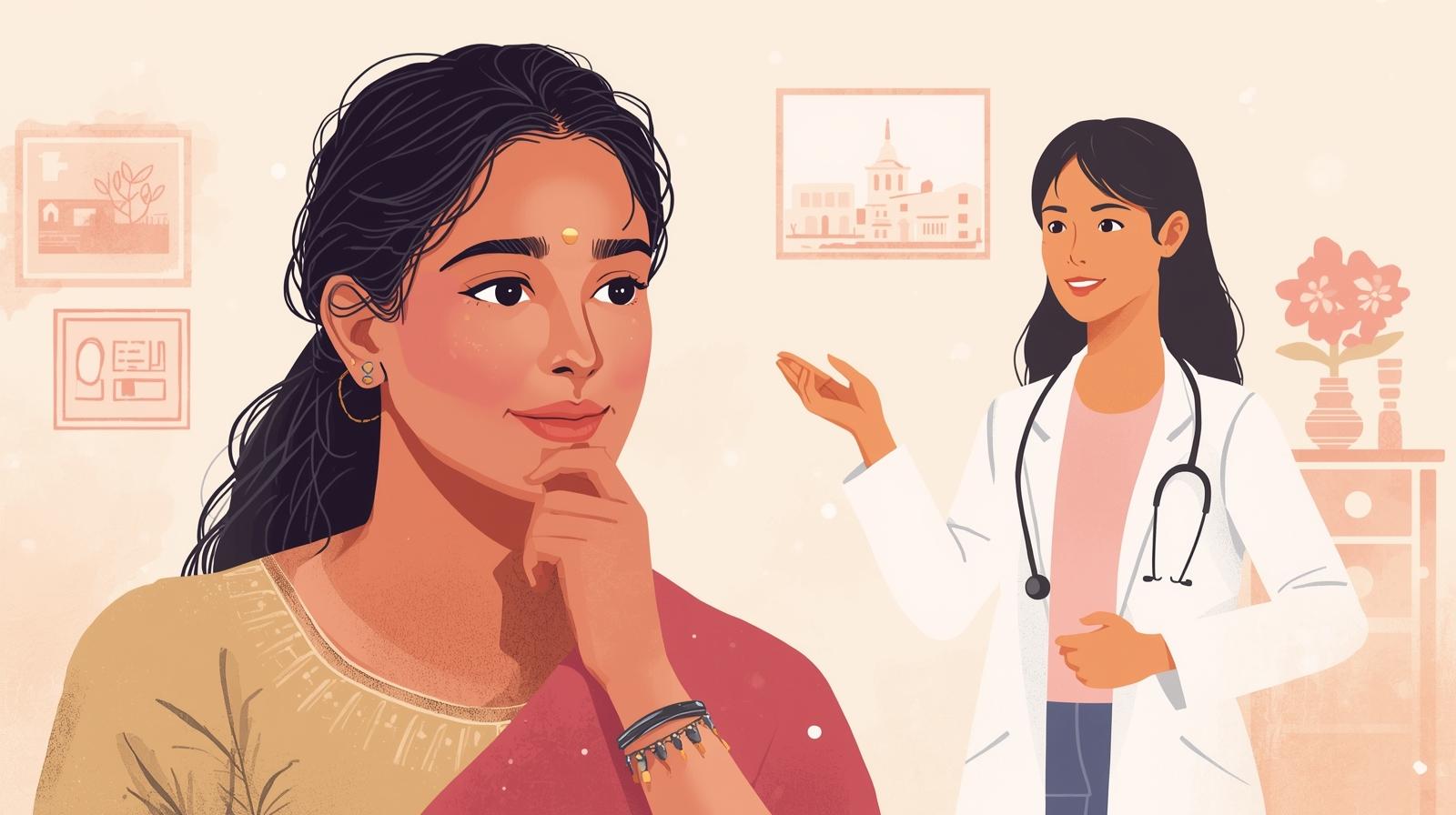
School lunches, office deadlines, parent meetings, late nights she handled everything, while quietly dealing with irregular periods after 35 that she never spoke about.
Except one thing.
Her periods had become irregular.
Sometimes early. Sometimes late. Sometimes heavy. Sometimes missing.
“After two kids, this is normal,” people told her.
“Why are you worrying now?” others said.
But deep inside, Sunita felt something wasn’t right.
One quiet afternoon, she walked into Dr. Ananya’s clinic, not as a worried young woman but as a tired mother finally listening to her body.
Sunita sat down and said softly,
“Doctor, I’ve had children. I’m done with pregnancy. So why do irregular periods still worry me?”
Dr. Ananya smiled gently.
“Because periods tell us a lot at every age.”
She explained that irregular periods affect women differently at different stages of life.
Irregular Periods in Teenage Years (13–19)
- Hormones are still learning balance
- Periods may skip months
- Flow can be light or heavy
- Stress, studies, junk food worsen it
“Mostly normal,” Dr. Ananya said, “but it still needs watching.”
Irregular Periods in 20s–Early 30s
- Work stress
- PCOS or PCOD
- Weight changes
- Delayed pregnancy concerns
“This is when irregular periods can affect fertility,” she added.
Irregular Periods in Late 30s–40s (Sunita’s Age)
Dr. Ananya looked at Sunita and said kindly,
“This phase is important.”
At this age, irregular periods may be due to:
- Hormone changes
- Stress overload
- Thyroid problems
- Low iron
- Early signs of menopause
Sunita nodded slowly.
“So my age matters now?”
“Yes,” said Dr. Ananya. “And so does care.”
Frequetnly Asked Questions
Q1: Are irregular periods normal after 35?
They can happen, but they should never be ignored.
Q2: Can stress alone cause irregular periods?
Yes. Stress affects hormones directly.
Q3: Should women with children still worry about periods?
Absolutely. Periods reflect overall health, not just fertility.
Sunita took a deep breath.
“Doctor, I feel tired all the time. Sometimes I bleed too much. Sometimes nothing at all.”
Dr. Ananya nodded.
“These are common problems of irregular periods and they affect women differently at different ages.”
Common Problems of Irregular Periods
Heavy Bleeding
- Leads to weakness
- Causes low iron
- Makes daily work difficult
Missed Periods
- Hormone imbalance
- Stress-related issues
- Early menopause signs
Painful Periods
- Uterus strain
- Hormone fluctuation
Mood Swings & Anxiety
- Emotional ups and downs
- Feeling irritated or low
Fertility Worries (Even After Children)
Sunita said quietly,
“People say, ‘You already have kids.’ But I still feel scared.”
Dr. Ananya replied softly,
“Irregular periods can affect health beyond pregnancy heart health, bones, and mental peace.”
Social Taboo & Silent Pressure
Sunita shared something she had never said aloud.
“My relatives say I shouldn’t complain. Some even joke that periods should stop at my age.”
Dr. Ananya shook her head.
“That thinking is wrong. Silence harms women more than disease.”
Irregular periods are not shameful.
They are signals.
Frequetnly Asked Questions
Q1: Can irregular periods cause weakness?
Yes. Heavy or frequent bleeding can cause anemia.
Q2: Is mood change linked to periods?
Yes. Hormones affect emotions strongly.
Q3: Should women talk openly about period problems after 35?
Yes. Early care prevents long-term issues.
Solutions for Irregular Periods After 35 at Different Ages
Healing the Body without a Blame
Sunita looked hopeful now.
“Doctor, tell me what I can do. I want to feel normal again.”
Dr. Ananya smiled.
“Your body doesn’t need punishment. It needs balance.”
Solution 1: Simple Lifestyle Changes
For women of all ages:
- Fixed sleep time
- Home-cooked food
- Less sugar and junk
- Daily walking or yoga
- Drinking enough water
Sunita smiled,
“So I don’t need to become perfect?”
“No,” laughed Dr. Ananya.
“Just kinder to yourself.”
Solution 2: Medical Check-Ups
Depending on age, tests may include:
- Blood tests
- Thyroid check
- Ultrasound
- Hormone levels
“These help us understand the root cause,” said Dr. Ananya.
Solution 3: Medicines (If Needed)
- To regulate cycles
- To reduce heavy bleeding
- To manage hormone imbalance
“These are support tools not lifelong crutches,” she explained.
Solution 4: Emotional Care
Dr. Ananya stressed this strongly:
- Stop ignoring symptoms
- Talk to family
- Reduce guilt
- Ask for help
“Motherhood doesn’t mean sacrificing your health,” she said gently.
Solution 5: Long-Term Health Focus
Regular periods help protect:
- Heart health
- Bone strength
- Mental balance
Sunita nodded.
“I never knew periods were linked to so much.”
“They are,” Dr. Ananya replied.
“They’re like a monthly health report.”
Frequetnly Asked Questions
Q1: Can irregular periods be corrected at any age?
Yes. With the right care, cycles can improve at any age.
Q2: How long does treatment take to show results?
Usually 3–6 months depending on the cause.
Q3: When should I see a doctor urgently?
If bleeding is very heavy, painful, or stops suddenly for months.
Conclusion
A few months later, Sunita returned to the clinic smiling.
“My periods are lighter now,” she said.
“And I feel more energetic.”
Dr. Ananya smiled proudly.
“You didn’t just fix your cycle. You respected your body.”
Sunita walked out feeling lighter not because her problems disappeared, but because she no longer ignored them.
0 Comments